Submitting a research paper to a scholarly journal can be exciting—but it can also be frustrating if your manuscript is rejected due to formatting errors rather than research quality. Many journals receive thousands of submissions each year, and papers that fail to follow formatting rules are often rejected during the initial screening.
Using a manuscript formatting checklist before journal submission ensures your paper meets journal standards, follows proper citation guidelines, and presents your research clearly.
In this guide, we’ll walk through a detailed checklist to help researchers prepare manuscripts that meet journal expectations and increase the chances of successful publication.
Why Manuscript Formatting Matters Before Journal Submission
Editors and reviewers evaluate not only the quality of research but also whether the manuscript follows the journal’s instructions.
Proper formatting helps:
- Improve readability
- Demonstrate professionalism
- Speed up the peer-review process
- Reduce the risk of desk rejection
Many publishers such as Elsevier provide detailed author instructions for formatting manuscripts. You can review typical journal formatting standards here
If authors ignore formatting rules, editors may reject the submission before sending it for peer review.
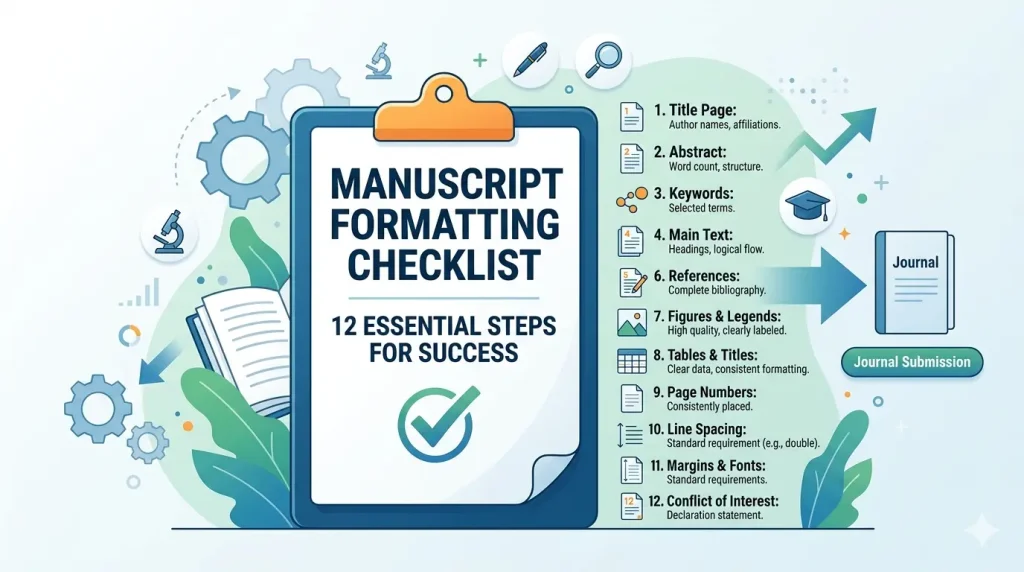
Manuscript Formatting Checklist Before Journal Submission
Below is a comprehensive manuscript formatting checklist before journal submission to help ensure your research paper meets academic publishing standards.
1. Confirm the Journal’s Author Guidelines
Before formatting your manuscript, carefully read the journal’s author guidelines.
Each journal has specific requirements for:
- Manuscript structure
- Word count limits
- Citation style
- Figure and table formats
- File types for submission
Always download the journal template if available. This will automatically guide your formatting.
For example, publishers like Springer provide author guidelines here
2. Format the Title Page Correctly
The title page should include essential information required by the journal.
Typical elements include:
- Full article title
- Author names
- Institutional affiliations
- Corresponding author email
- ORCID IDs (if required)
Some journals require separate title pages to maintain blind peer review.
3. Write a Clear and Structured Abstract
The abstract is often the first section editors and reviewers read.
Most journals require abstracts between 150 and 250 words.
A well-structured abstract typically includes:
- Research background
- Study objective
- Methodology
- Key findings
- Conclusion
Make sure the abstract clearly summarizes the contribution of your research.
4. Add Relevant Keywords
Keywords help search engines and academic databases index your research.
Best practices for keywords include:
- Include 3–6 keywords
- Avoid repeating words already in the title
- Use field-specific terminology
Effective keywords improve discoverability in databases like Google Scholar and Scopus.
5. Follow Proper Manuscript Structure
Most research articles follow a standard structure.
Common Academic Paper Structure
| Section | Purpose |
| Introduction | Explain research background and objectives |
| Literature Review | Summarize existing studies |
| Methodology | Describe research methods |
| Results | Present findings |
| Discussion | Interpret results |
| Conclusion | Summarize contributions |
This structure improves clarity and helps reviewers evaluate the research easily.
6. Ensure Consistent Citation Formatting
Incorrect references are one of the most common manuscript formatting problems.
Journals typically require specific citation styles such as:
- APA
- MLA
- Chicago
- Harvard
Make sure:
- In-text citations match the reference list
- Author names are spelled correctly
- Publication years are accurate
- DOIs are included where required
You can review official citation guidelines
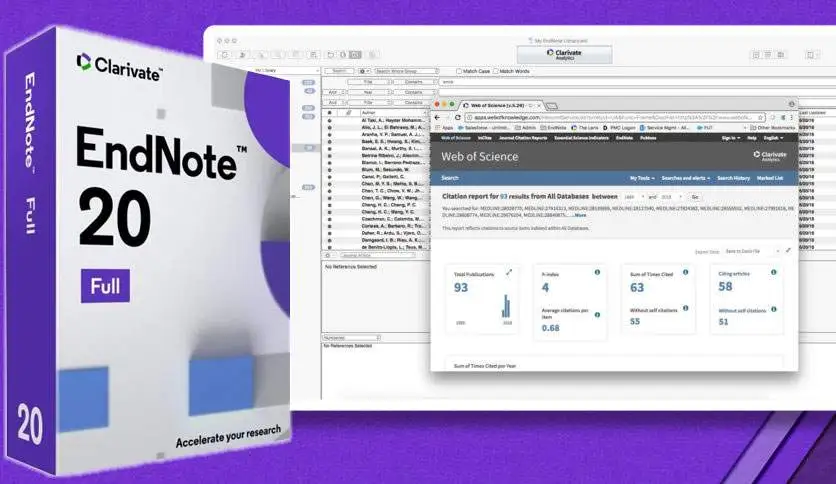
Using reference managers like Zotero, EndNote, or Mendeley can help maintain citation consistency.
7. Format Figures and Tables Properly
Figures and tables help present complex information clearly, but they must follow journal formatting standards.
Check the following:
- Each figure has a caption
- Tables include titles
- Images have sufficient resolution
- Figures are cited in the text
Most journals also require figures to be uploaded as separate files during submission.
8. Check Word Count and Section Limits
Many journals enforce strict word limits.
Typical research article limits include:
- Full article: 5,000–8,000 words
- Abstract: 150–250 words
- Keywords: 3–6 terms
Exceeding these limits may result in immediate rejection.
9. Maintain Consistent Formatting Style
Consistency throughout the manuscript is essential.
Make sure to check:
- Font type and size
- Line spacing
- Heading levels
- Margins
- Page numbering
Most journals require Times New Roman, 12 pt font, double spacing, but requirements may vary.
10. Check Grammar and Academic Language
Poor grammar can make a manuscript difficult to understand and reduce credibility.
Editors expect:
- Clear academic tone
- Correct grammar
- Logical sentence structure
- Consistent terminology
Running the manuscript through editing tools or professional proofreading services can greatly improve readability.
11. Prepare a Strong Cover Letter
A cover letter introduces your manuscript to the journal editor.
A good cover letter should include:
- Title of the manuscript
- Summary of the research contribution
- Confirmation that the manuscript is original
- Statement that the work is not under review elsewhere
A strong cover letter can improve the chances of your paper being sent for peer review.
12. Perform a Final Pre-Submission Review
Before submission, conduct a final review using your manuscript formatting checklist before journal submission.
Your final check should confirm:
- All required sections are included
- References are correct
- Formatting matches journal guidelines
- Figures and tables are properly labeled
- File names follow journal instructions
Taking time for a final review can prevent unnecessary rejection.
How ManuscriptLab Can Help You Prepare Your Manuscript
Preparing a manuscript for journal submission can be time-consuming and complex. This is where ManuscriptLab provides expert support for researchers and authors.
ManuscriptLab offers specialized services designed to help authors submit manuscripts that meet journal standards.
1. Professional Manuscript Formatting
Our experts ensure your manuscript follows the exact journal formatting requirements, including headings, spacing, and structure.
2. Citation and Reference Checking
ManuscriptLab verifies that your references follow the correct citation style and ensures consistency between in-text citations and the reference list.
3. Language Editing and Proofreading
We improve clarity, grammar, and academic tone to ensure your manuscript meets international publishing standards.
4. Journal Submission Preparation
Our team helps prepare your manuscript according to the journal’s submission guidelines, reducing the risk of desk rejection.
5. Pre-Submission Quality Review
Before submission, ManuscriptLab performs a comprehensive quality check to ensure your manuscript is ready for peer review.
With expert support from ManuscriptLab, researchers can confidently submit manuscripts that meet professional publishing standards and improve their chances of acceptance.
Frequently Asked Questions (FAQs)
1. Why is manuscript formatting important before journal submission?
Proper formatting ensures the manuscript meets the journal’s requirements, improves readability, and prevents rejection during the initial editorial screening.
2. What is a manuscript formatting checklist before journal submission?
A manuscript formatting checklist before journal submission is a list of formatting and structural requirements that authors must verify before submitting their research paper.
3. What are common manuscript formatting mistakes?
Common mistakes include:
- Incorrect citation styles
- Missing references
- Improper figure formatting
- Incorrect word count
- Ignoring journal guidelines
4. How many keywords should a manuscript include?
Most journals recommend 3–6 keywords to help improve indexing and discoverability in academic databases.
5. What should be included in a journal cover letter?
A cover letter should include the manuscript title, a brief research summary, author information, and confirmation that the paper is not under review elsewhere.
6. Can professional editing improve publication chances?
Yes. Professional editing services can improve language quality, formatting accuracy, and overall presentation, which increases the likelihood of acceptance.
Conclusion
Preparing a manuscript for publication requires more than strong research—it also demands strict adherence to formatting standards. Using a manuscript formatting checklist before journal submission ensures that your paper meets journal guidelines, improves readability, and avoids unnecessary rejection.
By carefully reviewing formatting, citations, structure, and language, researchers can significantly improve their chances of successful publication.
For authors seeking expert support, ManuscriptLab provides professional manuscript formatting, editing, and pre-submission review services to help researchers submit high-quality manuscripts with confidence.