
Authentic Turnitin Plagiarism Report Service
Turnitin Plagiarism Report Service for Students, Researchers, & Journal Authors
Our Turnitin plagiarism report service delivers an authentic similarity report for your research paper, thesis, dissertation, or journal manuscript, generated through a licensed Turnitin account in non-repository mode so your work stays confidential and never gets added to any database. Furthermore, every report includes the official Turnitin similarity score, color-coded source matching, and detailed breakdown of matches across journals, student submissions, and web content, all delivered as a downloadable PDF within 1 to 3 hours. Starting at just $10 per document.
Core Benefits
- Authentic Turnitin similarity report, not an alternative tool
- Non-repository mode guarantees your document stays confidential
- Color-coded source matching with similarity percentage breakdown
- PDF report accepted by universities, journals, and conference committees
- Delivered within 1 to 3 hours via secure email or download link
- Transparent $10 pricing per document with no hidden fees
Turnitin Plagiarism Report Explained
What Is a Turnitin Plagiarism Report?
Turnitin plagiarism report is an official similarity report generated by Turnitin software, comparing your academic document against billions of sources including published journals, student submissions, books, and web content. Furthermore, the report highlights matched text with a similarity percentage score and color-coded source breakdown for pre-submission review.
Specifically, every Turnitin plagiarism report shows your overall similarity index as a percentage, identifies each matched source with direct comparison links, categorizes matches by type (not cited or quoted, missing quotation, missing citation, or cited and quoted), and includes a flags panel that detects hidden characters or text replacement attempts. In addition, you receive the complete report as a downloadable PDF, which you can submit directly to your university, journal editor, conference committee, or thesis supervisor.
However, it is important to understand that a Turnitin similarity report does not determine plagiarism itself. Rather, the report flags text similarity against existing sources, which may or may not indicate academic misconduct. For instance, properly cited quotes, standard reference lists, common academic phrases, author names, and shared bibliography entries often appear as matches even though they are not plagiarism. Therefore, both your similarity score and the context of each flagged match require human review before any judgment about academic integrity can be made.
Note: Turnitin also uses the term ‘Originality Report’ interchangeably with ‘Similarity Report’ and ‘Plagiarism Report’ – all three refer to the same deliverable.
Trust and Legitimacy
Is Our Turnitin Plagiarism Report Service Legitimate?
Yes, our Turnitin plagiarism report service is fully legitimate. Specifically, every report is generated through a licensed Turnitin account in non-repository mode, which means your document is scanned against Turnitin’s full database but never stored, archived, or added to any permanent repository. Furthermore, we operate under strict confidentiality, SSL-encrypted file transfers, and permanent file deletion after 30 days. ManuscriptLab is an independent service provider and is not affiliated with Turnitin, LLC.
Licensed Turnitin Account
Non-Repository Mode
SSL Encrypted
30-Day File Deletion
GDPR Compliant
Whats Included
What Our Turnitin Plagiarism Checking Service Includes
Our Turnitin plagiarism checking service goes beyond a simple similarity percentage by delivering a complete analytical report that helps you understand every matched source, flagged text pattern, and potential academic integrity concern in your document. Furthermore, each report arrives as a downloadable PDF that is immediately ready for submission to your university, journal editor, conference committee, or thesis supervisor. Below, we break down exactly what you receive with every Turnitin plagiarism report.
This study investigates the relationship between climate variability and crop yield fluctuations across temperate agricultural zones. Research by Johnson et al. (2022) established that precipitation patterns significantly affect wheat production.
Furthermore, rising global temperatures have fundamentally altered growing seasons worldwide, requiring adaptive farming techniques for sustained yield outcomes.
Match Groups Analysis
Every Turnitin plagiarism report categorizes matched content into four specific match groups, which makes it significantly easier to understand which flags require your attention and which represent legitimate academic practice.
- Not Cited or Quoted: Identifies text that appears to be borrowed without attribution and represents the most problematic match type.
- Missing Quotation: Flags verbatim text that has a citation but is missing quotation marks.
- Missing Citation: Identifies properly quoted passages that lack a source citation.
- Cited and Quoted: Shows correctly attributed material that is appropriately marked and sourced.
As a result, you receive clear guidance on which matches need revision before submission and which are perfectly acceptable in academic writing.
Flags Panel Analysis
In addition to text similarity analysis, our Turnitin plagiarism checking service includes a flags panel that detects advanced manipulation attempts within your document.
- Hidden Characters: Identifies text colored white to inflate word count or reduce visible similarity.
- Text Replacement: Detects character swaps where one alphabet is replaced with similar-looking characters from another alphabet to bypass similarity detection.
Furthermore, this analytical layer protects the integrity of your submission by surfacing even unintentional formatting issues or content copied from manipulated sources, ensuring your work meets the technical standards expected by publishers and institutions.
Downloadable PDF Report
Every Turnitin plagiarism report is delivered as a professionally formatted PDF document that includes:
- Your full manuscript text with color-coded source highlights
- A complete source list with direct comparison links
- Your overall similarity index as a percentage
- A filterable match breakdown by source type
- Your flags panel summary
Specifically, the PDF format matches exactly what universities and journal editors use for official plagiarism evaluation, which means you can submit the same report directly to your supervisor, publisher, or conference committee without any format conversion. In addition, you can download the report multiple times from the secure link we provide, so you always have access to your similarity verification record.
AI Writing OverviewAdd-On
Turnitin also offers an AI Writing Overview as part of the Turnitin Originality add-on, which identifies text that may have been generated by artificial intelligence tools such as ChatGPT, Claude, Gemini, or other large language models.
- Pattern Analysis: Analyzes writing patterns, sentence structures, and linguistic markers to estimate what percentage of your document may be AI-assisted.
- Separate Report: Works alongside the standard similarity report but operates as a separate analysis layer, so you receive two distinct reports when you request it.
- Expert Guidance: Our team can guide you on interpreting these results if you add the AI Writing Overview to your plagiarism check for a small additional service fee.
Please note that AI detection remains a developing field and no AI detection tool is 100% accurate.
Color Code Guide
How to Read Your Turnitin Similarity Score
Your Turnitin similarity score is color-coded on a five-tier scale from Blue to Red, which immediately shows how much of your document matches other sources without you needing to read through every match individually. Furthermore, understanding what each color means helps you decide whether your submission is ready to send to your university, journal editor, or conference committee. Below, we break down each color range, explain what it signals, and tell you what action to take at each level.
A Blue indicator means your document has zero matching text in Turnitin’s database. Specifically, a 0% similarity score is extremely rare and usually indicates that your content is highly original, your document may be very short, or your citations and quoted material have been excluded. However, instructors may still review Blue-scored documents because a zero similarity score does not automatically guarantee that no academic integrity issues exist.
A Green indicator covers the 1% to 24% similarity range, which is considered acceptable for most academic work. Specifically, most matches in this range come from properly cited references, standard academic phrases, bibliography entries, and quoted material. Therefore, a Green similarity score usually indicates your document is ready for submission, assuming your citations are properly formatted and your references are complete.
A Yellow indicator signals that your document has 25% to 49% matching text, which requires careful review before submission. Specifically, this range often suggests heavy reliance on existing sources, extensive quoted material, or a lengthy literature review. Furthermore, you should use Turnitin’s exclusion filters to remove quoted content, bibliography entries, and small matches to reveal your true originality. As a result, Yellow similarity scores are not automatic rejections, but they do require refinement before most journals or universities will accept the submission.
An Orange indicator shows 50% to 74% matching text, a serious concern that many journals and universities will reject. Specifically, this range usually points to insufficient paraphrasing or large portions copied from other works. In addition, it often triggers academic integrity reviews, so you should rewrite flagged sections and improve your citations before resubmitting with a fresh similarity check.
A Red indicator means your document has 75% to 100% matching text, which is a critical similarity issue that will almost certainly result in rejection and may trigger formal academic misconduct investigations. Specifically, this score usually appears when text is copied directly from sources, when the same paper was previously stored in Turnitin’s repository, or when a template was used without original content. Therefore, a Red document should never be submitted as it is, and it needs substantial rewriting first.
Turnitin Score
What is an Acceptable Turnitin Score?
There is no universal “acceptable” Turnitin similarity score because every university, journal, and conference sets its own threshold based on discipline, document type, and institutional policy. However, industry standards do exist across most academic categories.
University thresholds by document type
| Document Type | Typical Acceptable Score | |
|---|---|---|
| Undergraduate assignments | Under 15% | |
| Masters theses | Under 20% | |
| PhD dissertations | Under 10% | |
| Research proposals | Under 15% |
Publisher thresholds by major journal group
| Publisher | Acceptable Threshold | |
|---|---|---|
| Elsevier | Under 15% | |
| Springer | Under 20% | |
| Wiley | Under 15% to 20% | |
| Taylor and Francis | Under 20% | |
| IEEE conference papers | Under 30% | |
| MDPI | Under 25% | |
| SAGE Publishing | Under 25% |
In addition, the APA Publication Manual recommends keeping direct quotations under 10% of your total word count regardless of the overall similarity score. Therefore, we strongly recommend always checking your target journal’s or institution’s specific plagiarism policy before submission to ensure your document meets their exact requirements.
Turnitin Plagiarism Report vs Originality Report
Many authors assume that the Turnitin plagiarism report, the Turnitin similarity report, and the Turnitin Originality report are three different documents. However, the first two are the same thing under different names, and the third is a separate product with a different purpose. Here is how they split:
Turnitin Similarity Report (also called the plagiarism report)
The Turnitin similarity report is the standard PDF that most universities and journals ask for. Specifically, it shows your overall similarity index, matched sources, color-coded highlights, and quoted passages. In everyday academic language, “plagiarism report” and “similarity report” refer to this same document, which is what you receive from our service.
Turnitin Originality (the AI writing add-on)
In contrast, Turnitin Originality is a paid add-on that institutions can enable alongside the similarity check. Specifically, it adds AI writing detection, writing-authenticity flags, and investigative features for suspected contract cheating. Therefore, if your university or journal has explicitly asked for an AI-detection score or an Originality report, that is a separate request your institution must enable.
Which Report Do You Actually Need?
For a standard pre-submission check (thesis, dissertation, research paper, journal manuscript), the Turnitin similarity report is almost always what universities and publishers mean when they ask for a “plagiarism report”. As a result, our 10$ service delivers exactly that. However, if your institution needs the AI Writing Overview specifically, mention it on your upload, and we will confirm whether that feature is enabled on the account processing your file.
Why Choose us
Why Choose Our Turnitin Plagiarism Report Service
Several providers now claim to offer Turnitin reports, so you deserve to know what makes ManuscriptLab different in practice. Specifically, five commitments shape every Turnitin plagiarism report we deliver.

Authentic Turnitin Reports, Not Alternative Tools
First, we deliver reports from a licensed, institution-grade Turnitin account, not from Quetext, Copyscape, Grammarly, or copycat sites like Turnitin0 that imitate the brand. As a result, your PDF carries the genuine Turnitin header and document ID that universities and publishers already recognise.
Non-Repository Mode by Default
Second, we always submit your file in non-repository mode, so your work is never stored in Turnitin’s standard paper repository. This matters because stored submissions later match themselves at 90 percent when your instructor or editor uploads the final version.
Delivered in 1 to 3 Hours
Third, most reports are delivered within one to three hours of upload, including evenings and weekends. For bulk orders of five documents or more, delivery stays within the same day in nearly every case.
SSL Encryption and GDPR-Compliant Handling
Fourth, uploads move over SSL-encrypted connections, and your file is deleted from our systems within 30 days of delivery, in line with GDPR data minimisation principles. In addition, we never resell, publish, or share your manuscript with any third party.
Transparent 10$ Pricing
Finally, our price is flat at ten dollars per document, with no monthly subscription, credit pack, or hidden “institution licence” upsell. Therefore, you pay for exactly one Turnitin plagiarism report and nothing you don’t need.
UNDERSTANDING YOUR REPORT
Common False Positives on Turnitin (and How We Explain Them)
Not every highlighted passage in a Turnitin similarity report is plagiarism. Specifically, four categories of text are flagged routinely even when the writing is entirely original. Here is how to recognise each one, and what to do before you submit.
Why Common Terms and Phrases Get Flagged
First, standard academic phrases ("the aim of this study was to", "statistically significant difference", "in accordance with") appear in thousands of published papers. Therefore, Turnitin flags them even though no one owns these phrases. Furthermore, discipline-specific terminology, protocol names, and chemical formulas are flagged for the same reason. In practice, these matches are noise, not plagiarism.
Why Author Names and Affiliations Get Flagged
Second, your own name, institutional affiliation, and the names of frequently cited authors in your field appear in Turnitin's database because they are published elsewhere. As a result, the title page, author block, and reference list regularly show matches that have nothing to do with your written content.
Why References and Citations Appear in Reports
Third, your reference list is almost always flagged because every paper you cited was indexed by Turnitin from the original source. Similarly, in-text citations like "(Smith, 2021)" repeat across thousands of papers using the same source. However, you can exclude the bibliography and quoted material from the report with Turnitin's built-in filters, which usually drops your similarity score by 5 to 15 percent.
How to Use Turnitin's Exclusions and Filters
Finally, Turnitin's exclusion filters let you remove quoted content, bibliography entries, and small matches (for example, phrases under 10 words) from the similarity calculation. In addition, you can exclude specific sources that are not relevant, such as a preprint of your own earlier work. Our service applies the standard set of exclusions by default, and we can run a custom exclusion pass on request.
Transparent pricing
Turnitin Plagiarism Report Service Pricing
Turnitin does not sell individual accounts to students or independent researchers. Specifically, Turnitin’s licence is sold to universities and publishers at institutional rates that start at roughly 3,000 US dollars per year, which prices out most authors who only need one or two similarity checks before a submission. Therefore, we offer the same official Turnitin plagiarism report on a per-document basis, with no subscription, no credit pack, and no hidden fees.
Complete Plan
Flat $10 Per Document
One flat price of 10 US dollars covers one complete Turnitin plagiarism report, delivered as a PDF within 1 to 3 hours. Furthermore, the price includes the following at no extra cost:
- Licensed Turnitin account submission in non-repository mode
- Full color-coded similarity report with matched sources and quoted passages
- Overall similarity index aligned with university and journal thresholds
- Secure email or download-link delivery
- 30-day file deletion from our systems
- In addition, there is no document length cap for a standard research paper, thesis chapter, or journal manuscript up to approximately 15,000 words.
- For longer documents, the 10$ price still applies, though delivery may extend to the upper end of the 1 to 3 hour window.
How Our Price Compares
Running your own Turnitin similarity check without our service usually means one of three routes. However, each route has a real trade-off:
| Option | Typical Cost | What You Actually Get |
|---|---|---|
| ManuscriptLab (per document) Best Value | $10 | Official Turnitin PDF, non-repository mode, 1 to 3 hours |
| Turnitin institutional licence | $3,000+ per year | Full campus access, requires an institution to purchase |
| iThenticate individual (publisher-grade) | $200+ for a 10,000-word bundle | Publisher-focused tool, no Draft Coach |
| Free "Turnitin alternative" tools | Free | Not an actual Turnitin report, not accepted by universities |
As a result, if you only need one authentic Turnitin plagiarism report for your thesis defence, journal submission, or supervisor review, ten dollars per document is the most practical route available to independent researchers.
Bulk and Institutional Orders
For universities, editing agencies, and research institutes ordering five or more Turnitin reports in a single batch, we offer per-document pricing on request. Specifically, bulk orders are invoiced together, delivered in one secure folder, and processed in non-repository mode so none of your institution's content enters Turnitin's standard paper repository. Contact us for a bulk quote with your document count and target delivery window.
Refund and Rework Policy
If the Turnitin report we deliver does not match the specifications on your order (wrong file processed, incorrect format, or report not generated), we rerun the check free of charge or refund your payment in full. However, because every report is pulled from a licensed Turnitin account and the similarity index is generated algorithmically, we cannot refund based on the similarity score itself.
Ready to get your Turnitin plagiarism report?
Upload your document now and receive your official PDF in 1 to 3 hours for ten dollars.
How it works
How to Get Your Turnitin Plagiarism Report in 3 Steps
You do not need a university login or a Turnitin subscription to get an official report. Instead, you upload your file once, and your Turnitin similarity report arrives by secure email or download link, usually within 1 to 3 hours.
Upload your document
Upload your thesis, dissertation, research paper, or assignment as a Word file (.doc or .docx) through our secure upload form. If your university or target journal sets a similarity limit, share it with your upload.
Turnitin Similarity Analysis
Next, we run your file through a licensed Turnitin account in non-repository mode, so your document is checked but never saved to Turnitin’s database. Turnitin then compares your text against published journals, books, web pages, and student papers to calculate your similarity index.
Receive Your Official Report (PDF)
Finally, you receive the full Turnitin plagiarism report as a PDF, showing your overall similarity percentage and a list of matched sources. As a result, you can review every flagged passage before submitting to your supervisor, university, or journal. If you revise your paper, you can request a fresh check, and each one gives you a new, independent report.
Who We Help
Who Needs Our Turnitin Plagiarism Report Service?
Our Turnitin plagiarism report service is built for authors who need an official similarity report but do not have direct access to a licensed Turnitin account. Specifically, the five groups below ask for a pre-submission check most often, each for a slightly different reason.
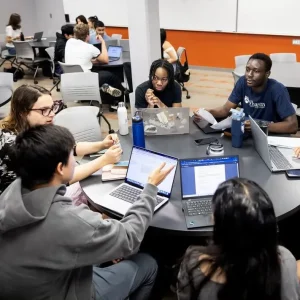
PhD and Master’s Thesis Submitters
PhD scholars and Master’s students use our service in the final weeks before a thesis or dissertation defense, when a single plagiarism flag can delay graduation by a full semester. Specifically, we deliver a Turnitin similarity report that shows your overall similarity index, matched sources, and quoted passages, so you can revise confidently before your supervisor’s review. As a result, you walk into your defense knowing exactly where every match comes from.

Journal Manuscript Authors (Scopus, Web of Science, PubMed, IEEE)
Researchers submitting to Scopus-indexed, Web of Science, PubMed, or IEEE-listed journals use our service to meet strict publisher thresholds before desk submission. Specifically, Elsevier, Springer, Wiley, Taylor and Francis, SAGE, and MDPI journals screen every manuscript with iThenticate or Turnitin on arrival. Therefore, running your own Turnitin plagiarism report first lets you fix flagged passages, strengthen citations, and avoid a desk rejection that can set your publication back by months.

International Researchers Without Institutional Turnitin Access
Many international researchers, visiting scholars, and independent academics do not have Turnitin access through their university or employer. Instead of asking a colleague for a favour or paying for a full institutional subscription, you upload one document and receive one authentic Turnitin similarity report for ten dollars. This is especially useful for researchers in Pakistan, India, the UAE, Southeast Asia, and East Africa, where institutional Turnitin access is uneven across departments.

Research Institutions and Agencies Needing Bulk Reports
Universities, research institutes, editing agencies, and academic consultancies order bulk Turnitin plagiarism reports for multiple manuscripts or student batches. For bulk orders, we invoice per document, deliver reports in a single secure folder, and keep every file in non-repository mode so none of your institution’s content ever enters Turnitin’s standard paper repository.

Students Without Draft Coach or LMS Access
Undergraduate and postgraduate students whose university has not enabled Turnitin Draft Coach, Canvas, Moodle, or Blackboard integrations use our service for pre-submission self-checks. Because your paper runs in non-repository mode, it is never saved to Turnitin’s student submission database. As a result, when your instructor later uploads your final paper, it does not match itself and inflate your similarity score.
Turnitin vs iThenticate: Which Do Journal Authors Need?
Both Turnitin and iThenticate are built by the same company (Turnitin LLC) and both check for text similarity against overlapping databases. However, they serve different audiences and different workflows. Here is the practical difference for authors.
Who Uses Each Tool
- Turnitin is the standard across universities, colleges, and student-facing workflows worldwide.
- It is usually integrated with Canvas, Moodle, Blackboard, or D2L Brightspace.
- In contrast, iThenticate is the publisher-grade tool used by Elsevier, Springer, Wiley, Taylor and Francis, SAGE, and most Scopus-indexed journals during their manuscript screening and peer review stages.
- As a result, if your university asks for a plagiarism report, they almost certainly mean Turnitin;
- If your target journal references “CrossRef Similarity Check” during submission, that check is run through iThenticate.
What the Score Difference Looks Like
- Both tools calculate a similarity index and produce a PDF report, so the format feels familiar.
- However, iThenticate’s database skews toward published scholarly content (38 million+ articles, publisher archives),
- While Turnitin’s database includes a very large student submissions pool.
- In practice, this means the same manuscript can produce slightly different scores on each tool, usually within a few percentage points.
Which Report Should You Get Before Submission
- For a thesis defence, course assignment, or supervisor review, request a Turnitin plagiarism report.
- In contrast, if you are submitting a research manuscript to an Elsevier, Springer, Wiley, or SAGE journal, the publisher will run iThenticate on their end,
- So a pre-submission Turnitin check still gives you a reliable view of how your text will look to that iThenticate screen.
- Therefore, for most authors, a 10$ Turnitin report is enough to catch issues before any publisher-side iThenticate scan flags them.
Testimonials

Frequently Asked Questions (FAQs)
Does a high Turnitin similarity score mean I have plagiarised?
No, a high similarity score does not automatically mean plagiarism. Specifically, Turnitin measures text overlap with other sources, but it cannot judge whether that overlap is a properly cited quotation, a standard academic phrase, a reference list, or genuine misconduct. Therefore, the similarity index is a signal for review, not a verdict. Only your instructor, supervisor, or editor can decide whether a flagged passage is misconduct, after reviewing the matched sources in context.
How long does it take to receive the Turnitin plagiarism report?
Your Turnitin plagiarism report is delivered within 1 to 3 hours of upload, including evenings and weekends. Specifically, standard documents under 15,000 words usually arrive at the lower end of that window. For bulk orders of five documents or more, delivery stays within the same day in nearly every case.
Is the report generated from a licensed, genuine Turnitin account?
Yes, every report is generated through a licensed Turnitin account, not from alternative tools like Quetext, Copyscape, or copycat sites. As a result, your PDF carries the official Turnitin header, document ID, and similarity index that universities and publishers already recognise. In addition, the format matches exactly what institutional reviewers expect to see.
Will my document be stored or added to the Turnitin database?
No, your document is never stored in Turnitin’s database. Specifically, we always run your file in non-repository mode, which means Turnitin checks it but does not save it to the standard paper repository. Therefore, when your instructor, supervisor, or editor later uploads your paper officially, our pre-check leaves no footprint behind, and your paper will not match itself at a high percentage on the official check.
Can I request a fresh Turnitin check after revising my document?
Yes, you can order a fresh Turnitin plagiarism report after revisions. Each check generates a new, independent report with its own document ID and similarity index, so you can compare before and after versions accurately. In addition, revised reports are processed within the same 1 to 3 hour standard delivery window.
What file formats are accepted for the Turnitin check?
We accept manuscripts in Microsoft Word (.doc and .docx), which is the standard format Turnitin processes natively. However, PDF and LaTeX files can also be converted to Word before checking, so send them along and we handle the conversion at no extra cost. In contrast, scanned PDFs with image-only text are not supported, since Turnitin requires selectable text to perform similarity analysis.
Do you offer plagiarism removal, paraphrasing, or rewriting?
No, this service only provides a Turnitin similarity check and official report. However, we offer plagiarism reduction, paraphrasing, and citation correction as separate services upon request. Therefore, if your Turnitin report shows a high score and you need help lowering it before resubmission, contact us and we will quote the paraphrasing service separately.
Will Turnitin detect AI-generated content like ChatGPT?
Turnitin’s AI Writing Overview feature can flag content likely generated by ChatGPT, Claude, Gemini, and similar AI tools, but this is a separate module from the similarity report. Specifically, the standard Turnitin plagiarism report shows text overlap with existing sources, while AI detection analyses writing patterns. Therefore, if your university or journal requires an AI detection result, mention it on your upload.
How do you protect my manuscript and personal data?
We protect your manuscript through four safeguards: SSL-encrypted uploads, non-repository submission so your file never enters Turnitin’s database, deletion from our systems within 30 days of delivery, and GDPR-compliant handling with no third-party sharing. In addition, we never resell, republish, or share any part of your document with any outside party.
How can students without institutional Turnitin access get a plagiarism report?
Students without a university-provided Turnitin account can order a single Turnitin plagiarism report through our service for ten dollars per document. Specifically, this is useful for international students, independent researchers, visiting scholars, and students whose university has not enabled Turnitin Draft Coach, Canvas, Moodle, or Blackboard integrations. As a result, you get an authentic Turnitin PDF without paying for a full institutional subscription.
Is 25% on Turnitin high?
A 25% similarity score sits in the Yellow range, which requires careful review before submission. Specifically, this score is acceptable for IEEE conference papers (up to 30 percent), MDPI, and SAGE Publishing (up to 25 percent), but it is above the limit for Elsevier, Wiley, and most PhD dissertations. In practice, you should run exclusion filters to see your true originality before deciding whether to revise.
Is 15% similarity on Turnitin acceptable?
Yes, 15% is generally acceptable for most undergraduate assignments, research proposals, and journals like Elsevier and Wiley. However, acceptable thresholds vary by institution and publisher. For example, Springer and Taylor and Francis accept up to 20 percent, while PhD dissertations usually require under 10 percent. Therefore, always check your specific university or journal plagiarism policy before submission.
How is the Turnitin similarity score calculated?
The Turnitin similarity index is calculated as the percentage of your document text that matches other sources in Turnitin’s database. Specifically, it counts matched words divided by total words, then expresses the result as a single percentage shown on the report cover. However, this calculation includes quoted material, bibliography entries, and small matches unless you exclude them with Turnitin’s built-in filters.
What sources does Turnitin compare my document against?
Turnitin compares your document against four main source types: published academic journals and conference papers, student submissions and dissertations from partner institutions, web pages and online repositories, and subscription-based databases including Crossref-indexed content. In addition, Turnitin’s database spans more than 20 years of content across more than 170 languages, which is why it is considered the standard for academic similarity screening.
Why does my thesis show 25 to 30% similarity when I did not copy anything?
A thesis or research paper can legitimately show 25 to 30% similarity when the bibliography matches other papers in the field, the methodology section uses standard technical phrasing, and the direct quotations are correctly placed in quotation marks. In each of those cases, there is no plagiarism, only legitimate text overlap. Furthermore, excluding the reference list and quoted material using Turnitin’s filters often drops the score by 5 to 15%.
Will my score inflate if the same paper is submitted to Turnitin again later?
No, because we use non-repository mode, your paper is never stored in Turnitin’s student submissions database. As a result, when your university, journal, or supervisor runs the final Turnitin check, your paper will not match itself. In contrast, free or shared Turnitin accounts often store submissions by default, which later causes a 90 percent self-match on the official check.
How is Turnitin different from iThenticate for journal submission?
Turnitin and iThenticate are both built by Turnitin LLC and share overlapping databases, but they serve different audiences. Specifically, Turnitin is the standard for universities, student assignments, and thesis checks, while iThenticate is the publisher-grade tool used by Elsevier, Springer, Wiley, Taylor and Francis, and SAGE for manuscript screening. In practice, a pre-submission Turnitin check still gives you a reliable preview of how your text will look to the publisher’s iThenticate scan.
Can I download the Turnitin plagiarism report as a PDF?
Yes, every Turnitin plagiarism report we deliver is a downloadable PDF file. Specifically, the PDF includes your similarity index, color-coded matched sources, quoted text, and reference matches, formatted exactly as universities and publishers expect. Furthermore, you receive the PDF through secure email or a time-limited download link, and the file remains with you permanently after delivery.
Do you provide a plagiarism certificate or proof of originality?
Yes, the Turnitin PDF report itself serves as your plagiarism certificate. Specifically, it shows your similarity index, document ID, matched sources, and timestamp, which is the exact proof of originality that universities, publishers, and conference committees accept. Furthermore, no separate certificate is needed because the Turnitin report is the industry standard for academic integrity verification.
What payment methods do you accept?
We accept secure payments through major credit and debit cards, PayPal, and bank transfer for institutional and bulk orders. Specifically, payment is processed before your Turnitin report is generated, and your transaction details are handled by our payment partners, not stored on our servers. Therefore, you only share payment information with established gateways like Stripe or PayPal, not with us directly.
Order Your Turnitin Plagiarism Report Today
Upload your document now and receive your official Turnitin similarity report (PDF) within 1 to 3 hours, for just $10
Trusted by thesis submitters, journal authors, and research institutes in 40+ countries. Your file is never saved to Turnitin's database.
Have a bulk order or need a custom timeline? Contact us on WhatsApp for a quote.