Publishing in an academic journal is one of the most important milestones for researchers, scholars, and graduate students. However, many manuscripts are rejected not because the research is weak, but because authors fail to follow guidelines for submission, ignore citation guidelines, or misunderstand who is the audience of a journal.
If you want to increase your chances of getting published, you must understand how journals work, what editors expect, and how to prepare a manuscript that meets professional standards.
In this guide, we’ll explore practical strategies to improve your acceptance chances, including proper formatting, following APA citation guidelines, MLA citation guidelines, and preparing your paper according to journal expectations.
Understanding the Purpose of an Academic Journal
An academic journal is a scholarly publication that shares peer-reviewed research, theoretical discussions, and scientific discoveries within a specific field.
These journals serve several purposes:
- Disseminate new research findings
- Advance academic knowledge
- Provide evidence-based insights for scholars and practitioners
- Maintain academic standards through peer review
Examples include journals in medicine, social sciences, engineering, education, and humanities.
Most journals follow strict editorial processes, which means even high-quality research must be presented in the correct format to be accepted.
To explore examples of scholarly journals and publishing standards, you can visit here
Who Is the Audience of a Journal?
One of the most overlooked aspects of academic publishing is understanding who is the audience of a journal.
Every academic journal has a specific target readership. This audience typically includes:
- Researchers and scholars
- University faculty
- Graduate students
- Industry professionals
- Policymakers
For example:
| Journal Type | Primary Audience |
| Medical journals | Doctors, researchers, healthcare professionals |
| Education journals | Teachers, researchers, policy experts |
| Engineering journals | Engineers and technical researchers |
| Humanities journals | Scholars in literature, philosophy, and culture |
Understanding who is the audience of a journal helps you:
- Adjust your writing style
- Choose appropriate terminology
- Emphasize relevant findings
Before submitting your manuscript, always read 2–3 articles from the journal to understand the tone, structure, and expectations.
Follow the Journal’s Guidelines for Submission
One of the most common reasons manuscripts are rejected is failure to follow guidelines for submission.
Every academic journal has detailed submission requirements that may include:
- Word limits
- Formatting requirements
- Citation style
- Figure and table formatting
- Abstract structure
- Author information
Ignoring these guidelines for submission signals to editors that the author may not have carefully reviewed the journal’s instructions.
Typical submission components include:
- Title page
- Abstract (150–250 words)
- Keywords
- Main manuscript
- References
- Figures and tables
- Cover letter
You can find examples of submission instructions from publishers like Elsevier
Choose the Right Journal for Your Research
Selecting the wrong journal dramatically reduces publication chances.
When choosing an academic journal, consider:
1. Scope of the Journal
Ensure your topic matches the journal’s subject area.
2. Impact Factor
While not everything, impact factor indicates journal influence.
3. Acceptance Rate
Some journals have acceptance rates below 10%.
4. Publication Timeline
Some journals take months or even years to publish accepted papers.
Using databases like Scopus or Web of Science can help identify appropriate journals.
Follow Proper Citation Guidelines
Correct referencing is critical in academic publishing. Most journals require strict adherence to citation guidelines.
Proper citations:
- Acknowledge original authors
- Prevent plagiarism
- Strengthen research credibility
- Help readers locate sources
The most commonly used citation styles include:
- APA
- MLA
- Chicago
- Harvard
Editors carefully review whether authors follow these citation guidelines consistently.
Using APA Citation Guidelines Correctly
Many journals in social sciences, psychology, and education require APA citation guidelines.
APA style includes:
In-Text Citation
Example:
(Smith, 2020)
Reference List Example
Smith, J. (2020). Research methods in education. New York: Academic Press.
Key APA rules include:
- Author-date citation system
- Alphabetical reference list
- Specific formatting for books, journals, and websites
You can review official APA standards here
Using MLA Citation Guidelines
Journals in literature, humanities, and cultural studies often use MLA citation guidelines.
In-Text Citation Example
(Smith 45)
Works Cited Entry Example
Smith, John. Modern Literary Theory. Oxford University Press, 2020.
Important MLA rules include:
- Author-page citation format
- Works Cited page instead of references
- Minimal punctuation in citations
The official MLA style guide can be found here
Write a Clear and Structured Manuscript
Editors and reviewers prefer manuscripts that are easy to read and well structured.
Typical structure of an academic article includes:
- Title
- Abstract
- Introduction
- Literature Review
- Methodology
- Results
- Discussion
- Conclusion
- References
Each section should clearly explain the purpose and findings of your research.
Good structure improves readability and demonstrates professionalism.
Strengthen Your Literature Review
A strong literature review shows that you understand existing research.
Your literature review should:
- Identify research gaps
- Compare previous studies
- Show how your work contributes new knowledge
A weak literature review often leads to rejection because reviewers cannot see the research significance.
Improve Language and Academic Writing Quality
Even excellent research can be rejected if the writing is unclear.
Editors expect:
- Clear academic language
- Logical flow of ideas
- Consistent terminology
- Correct grammar and punctuation
If English is not your first language, professional editing can significantly improve acceptance chances.
Respond Effectively to Peer Review Feedback
Most manuscripts undergo peer review before publication.
Reviewers may request:
- Clarification of methodology
- Additional references
- Data explanation
- Structural improvements
Instead of viewing feedback negatively, treat it as an opportunity to strengthen your paper.
Successful authors carefully address reviewer comments and resubmit revised manuscripts.
How ManuscriptLab Can Help You Get Published
Publishing in an academic journal can be challenging, especially for early-career researchers. This is where ManuscriptLab can provide valuable support.
ManuscriptLab helps researchers improve their manuscripts before submission by offering:
1. Professional Academic Editing
Our experts refine grammar, clarity, and academic tone to ensure your manuscript meets journal standards.
2. Formatting According to Journal Guidelines
We ensure your paper follows the correct guidelines for submission, including formatting, references, and manuscript structure.
3. Citation and Reference Checking
Our team verifies references and ensures compliance with:
- APA citation guidelines
- MLA citation guidelines
- Other citation guidelines required by journals.
4. Journal Selection Assistance
Choosing the right academic journal significantly increases acceptance chances. ManuscriptLab helps match your research with suitable journals.
5. Pre-Submission Review
We conduct detailed reviews to identify weaknesses before submission, improving the likelihood of acceptance.
With expert support from ManuscriptLab, researchers can submit manuscripts with confidence and improve their chances of successful publication.
Frequently Asked Questions (FAQs)
1. What is an academic journal?
An academic journal is a scholarly publication that publishes peer-reviewed research articles, reviews, and theoretical studies within specific academic disciplines.
2. Why are guidelines for submission important?
Guidelines for submission ensure manuscripts follow the formatting, structure, and citation standards required by the journal, which helps editors evaluate submissions efficiently.
3. What are APA citation guidelines?
APA citation guidelines are referencing rules used mainly in social sciences that follow the author-date format for in-text citations and references.
4. What are MLA citation guidelines?
MLA citation guidelines are commonly used in humanities and literature research and rely on the author-page citation system with a Works Cited list.
5. Who is the audience of a journal?
The audience of a journal typically includes researchers, academics, graduate students, and professionals working in the journal’s subject area.
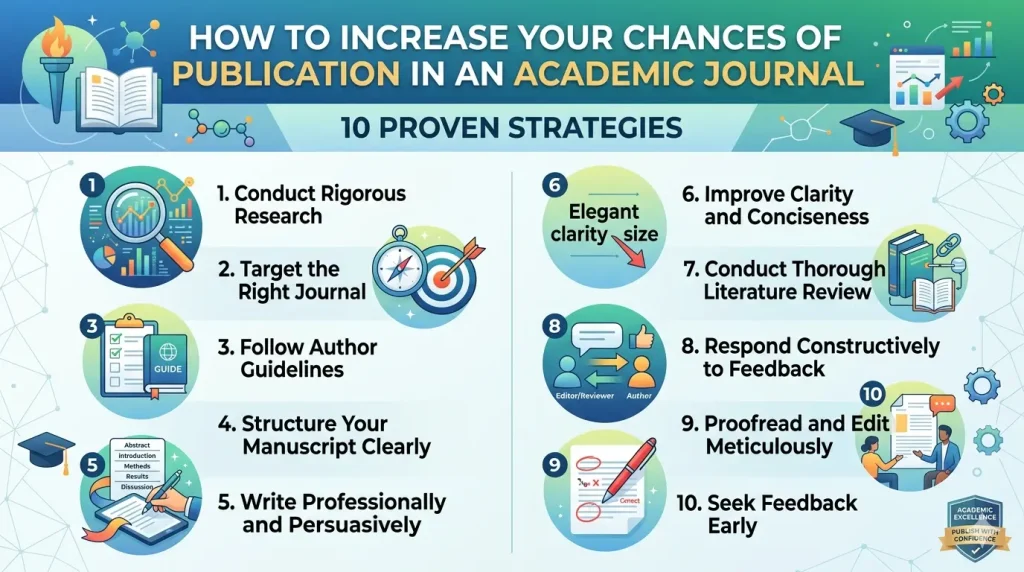
6. How can I increase my chances of publication?
To improve acceptance chances:
- Follow submission guidelines carefully
- Use correct citation styles
- Choose the right journal
- Write clearly and professionally
- Address peer review feedback effectively
Conclusion
Publishing in an academic journal requires more than strong research. Authors must understand guidelines for submission, follow proper citation guidelines, and know who is the audience of a journal.
By selecting the right journal, formatting your manuscript correctly, and using citation styles like APA citation guidelines or MLA citation guidelines, you can significantly increase your chances of acceptance.
For researchers who want expert support, ManuscriptLab provides professional editing, formatting, and submission assistance to help transform promising research into successfully published articles.