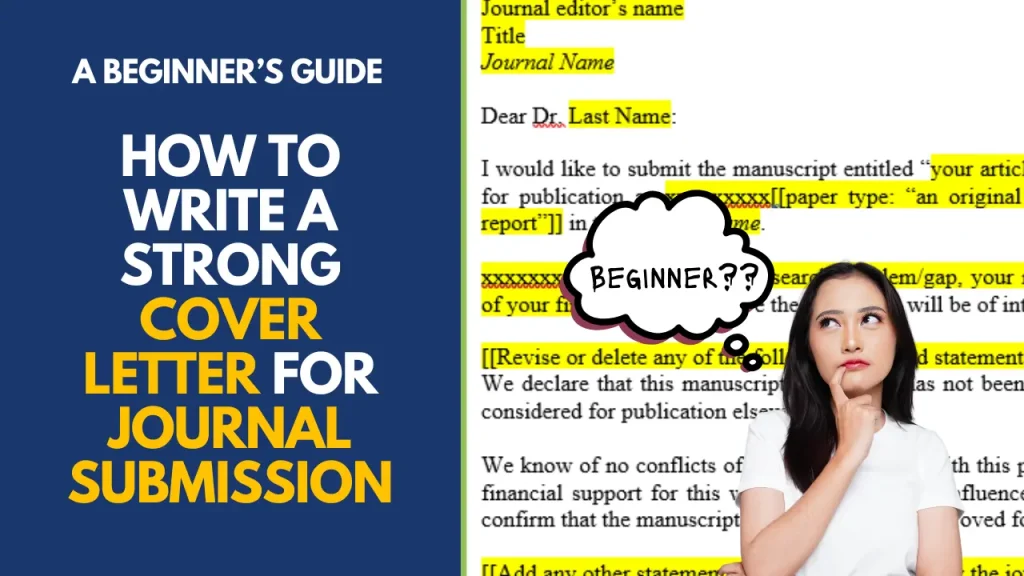
Many researchers focus heavily on writing their manuscript but forget about an important document that accompanies the submission: the cover letter.
A cover letter for journal submission introduces your research to the editor. It briefly explains the importance of your study, why it fits the journal, and confirms that your manuscript follows ethical publication standards.
Editors often read the cover letter before opening the manuscript. A clear and professional cover letter helps editors understand your work quickly and decide whether the paper should proceed to peer review.
In this guide, you will learn how to write a strong cover letter for journal submission, what to include, what mistakes to avoid, and how to increase your chances of getting your manuscript reviewed.
What is a Cover Letter for Journal Submission?
A cover letter for journal submission is a short professional letter sent to the journal editor along with your manuscript.
The purpose of the cover letter is to:
- introduce your research
- explain why it fits the journal
- highlight the importance of your study
- confirm ethical statements such as originality and conflicts of interest
According to publisher author guidelines, a cover letter should clearly state the manuscript title, article type, and confirmation that the manuscript has not been submitted elsewhere.
Many journals recommend including a brief explanation of why the research is relevant to the journal’s audience.
Why a Strong Cover Letter Matters
A cover letter may seem simple, but it plays an important role in the editorial decision process.
A strong cover letter helps editors:
- quickly understand the value of the research
- determine whether the manuscript fits the journal scope
- verify compliance with submission policies
- decide whether the paper should proceed to peer review
Publishers like Elsevier emphasize that selecting the right journal and clearly presenting your work improves the chances of successful submission.
A well-written cover letter demonstrates professionalism and shows that the author understands the journal’s expectations.
When Do You Need a Cover Letter?
Most journals request a cover letter during submission.
You typically need one when:
- submitting a research article
- submitting a review article
- resubmitting a revised manuscript
- submitting to a new journal after rejection
Some journals provide a cover letter template. Others allow you to upload your own document.
Always check the journal’s author guidelines before preparing your cover letter.
Step-by-Step Guide to Writing a Strong Cover Letter
1. Address the Editor Properly
Begin your cover letter by addressing the editor professionally.
Example:
Dear Dr. Smith
Dear Editor-in-Chief
Dear Editorial Team
If possible, use the editor’s name. This shows that you have researched the journal.
2. Mention the Manuscript Title and Article Type
Start your letter by clearly stating the manuscript title and the type of article you are submitting.
Example:
We would like to submit our manuscript titled “Title of Your Research Paper” for consideration as a research article in Journal Name.
This helps the editor quickly identify your submission.
3. Briefly Explain the Importance of Your Research
After introducing the manuscript, briefly describe:
- the research topic
- the main findings
- the significance of the study
Keep this section short. Editors do not need a full summary because they will read the abstract.
Example:
This study investigates the impact of X on Y and provides new insights into Z. Our findings contribute to the existing literature by demonstrating that…
Focus on the value of the research.
4. Explain Why the Manuscript Fits the Journal
Editors want to know why you chose their journal.
Explain how your research matches:
- the journal’s scope
- the target audience
- the research field
Example:
We believe this research aligns well with the journal’s focus on environmental sustainability and will be valuable to researchers working in climate science.
This step shows that you carefully selected the journal.
5. Confirm Ethical Statements
Most journals require authors to confirm several ethical points.
Common statements include:
- the manuscript is original
- the manuscript is not submitted elsewhere
- all authors approved the submission
- there are no conflicts of interest
Example:
We confirm that this manuscript is original, has not been published previously, and is not currently under consideration by another journal.
These confirmations help editors ensure compliance with publication ethics.
6. Provide Author Contact Information
End the letter with the corresponding author’s contact details.
Include:
- name
- institution
- affiliation
Example:
Please address all correspondence to:
Dr. John Doe
Department of Biology
XYZ University
Email: [email protected]
Example of a Journal Submission Cover Letter
Dear Editor,
We would like to submit our manuscript titled “Title of Paper” for consideration as a research article in Journal Name.
This study examines the relationship between X and Y and provides new insights into Z. Our findings contribute to the current literature by demonstrating how these factors influence research outcomes in this field.
We believe this manuscript fits well with the scope of Journal Name and will be of interest to researchers working in this area.
We confirm that this manuscript is original, has not been published previously, and is not under consideration by another journal. All authors have approved the manuscript and agree with its submission.
Thank you for considering our work.
Sincerely,
Author Name
Institution
Email
Common Mistakes to Avoid
Many researchers write weak cover letters because they make avoidable mistakes.
Here are the most common problems.
Writing a very long letter
A cover letter should be short and direct. Editors prefer concise communication.
Repeating the abstract
The cover letter should summarize the research value, not repeat the abstract.
Sending the same letter to every journal
Editors can easily detect generic cover letters. Always tailor the letter to the journal.
Ignoring journal scope
If the paper does not match the journal scope, the editor may reject it immediately.
Missing ethical statements
Failing to confirm originality or authorship can delay the review process.
Tips to Write a Better Cover Letter
Follow these practical tips to improve your cover letter:
- keep the letter between 150 and 250 words
- clearly explain the research contribution
- show why the journal is the right choice
- write in a professional tone
- avoid unnecessary technical detail
- review grammar and clarity carefully
Many editors recommend keeping the cover letter simple and focused.
How ManuscriptLab Can Help
Preparing a research manuscript involves many steps, and the cover letter is only one part of the process.
At ManuscriptLab, we support researchers throughout the publication journey.
Our team can help you with:
- academic proofreading
- manuscript editing
- journal formatting
- cover letter preparation
- journal selection guidance
- submission readiness review
If you plan to submit to a Scopus indexed journal, we can help ensure that your manuscript, formatting, and submission documents meet the journal’s requirements.
We do not promise guaranteed acceptance, but we help researchers submit stronger and more professional manuscripts.
Final Thoughts
A cover letter may be short, but it plays an important role in journal submission.
A well-written cover letter helps editors quickly understand your research, evaluate journal fit, and move your manuscript toward peer review.
Focus on clarity, professionalism, and relevance to the journal. With the right preparation, your cover letter can support a stronger submission.
If you want expert help polishing your manuscript, formatting your paper, or preparing your submission documents, ManuscriptLab can support your publication journey.