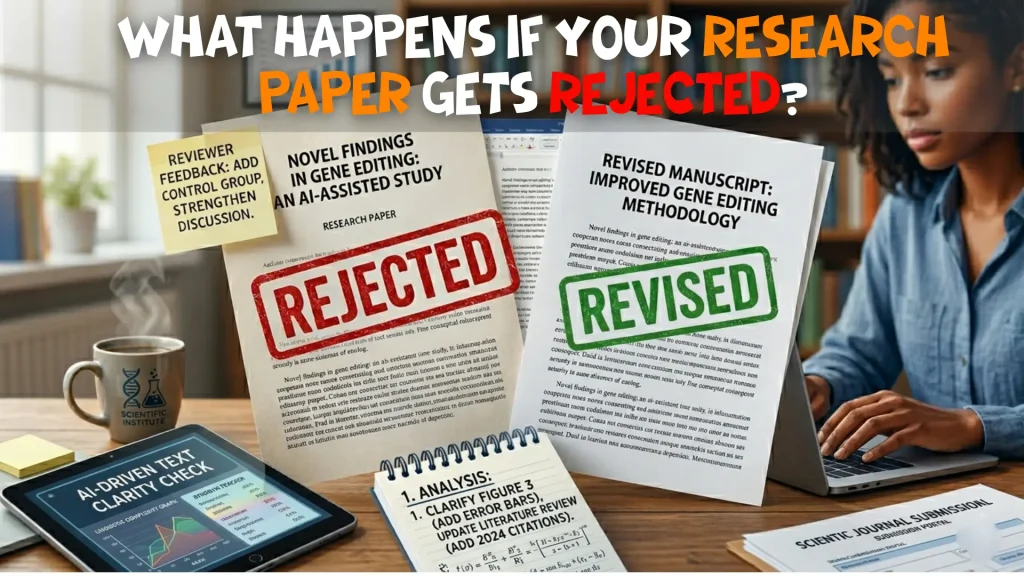
Getting a research paper rejected can feel frustrating and discouraging, especially after spending months or even years working on your study. However, getting your research paper rejected is actually a common experience in academic publishing. Many well-known researchers have faced research paper rejection multiple times before their work was eventually published.
In fact, rejection is often part of the normal process of academic research. Journals receive hundreds or thousands of submissions each year, and only a limited number can be published. Because of this, even strong papers may be declined.
Another growing concern today is AI usage in research. With tools like AI writing assistants becoming more common, many researchers ask: can your research paper get rejected for AI usage? The short answer is yes—but usually only when AI is used improperly or without transparency.
In this blog, we will explore:
- Why research paper rejected decisions happen
- The biggest reason for journal article rejection
- Whether AI usage in research can cause rejection
- How to handle rejection and improve your paper
Understanding these factors can help researchers avoid common mistakes and improve their chances of publication.
Understanding Research Paper Rejection
A research paper rejected decision means that a journal has decided not to publish your manuscript. This can happen at different stages of the publication process.
Sometimes the paper is rejected quickly during an editorial review. In other cases, rejection happens after peer reviewers carefully evaluate the study.
Although rejection can be disappointing, it is important to remember that research paper rejection does not always mean the study is poor. Many papers are rejected simply because they do not fit the journal’s focus or because the competition for publication is high.
In academic publishing, rejection is very common. According to Elsevier’s publishing guidelines, some prestigious journals reject more than 80–90% of submitted papers.
Can Your Research Paper Get Rejected for AI Usage?
A question many researchers now ask is: can your research paper get rejected for AI usage?
The answer is yes—but only under certain circumstances.
AI tools are increasingly used in academic work for tasks like:
- language editing
- summarizing literature
- improving clarity
- generating outlines
However, problems arise when AI is used in ways that violate academic standards.
Situations Where AI Usage May Cause Rejection
Journals may reject a paper if:
- AI-generated text is submitted without proper editing
- AI tools are used to fabricate data or references
- the author does not disclose AI assistance when required
- the writing lacks originality or critical analysis
These issues raise concerns about academic integrity and research authenticity.
Ethical AI Usage in Academic Research
Using AI responsibly is possible and increasingly accepted in academia. The Committee on Publication Ethics (COPE) has published clear guidance on AI usage in research, stating that researchers must disclose AI assistance and remain fully responsible for the content.
Ethical AI usage in academic research generally means:
- using AI for editing or support rather than full authorship
- verifying all information produced by AI
- disclosing AI tools when required by the journal
- ensuring the researcher remains responsible for the content
When used ethically, AI usage in research can actually improve clarity and efficiency without harming academic credibility.
The Biggest Reason for Journal Article Rejection
Many researchers wonder about the biggest reason for journal article rejection. While several factors can lead to rejection, one of the most common is poor research design or weak methodology.
If the study design is flawed, even strong writing cannot save the paper.
Examples include:
- insufficient sample size
- unclear research questions
- incorrect statistical analysis
- weak data collection methods
Editors and reviewers prioritize research quality above everything else. If the foundation of the study is weak, journals are unlikely to accept it.
Common Reasons Journals Reject Papers
Understanding the reasons journals reject papers can help researchers avoid common mistakes before submitting their work.
1. Poor Fit with the Journal
Sometimes a paper is rejected simply because it does not match the journal’s topic or audience.
For example, a healthcare study submitted to a technology journal may be rejected even if the research is strong.
2. Lack of Original Contribution
Journals want research that adds new knowledge to a field. If the study repeats existing work without offering new insights, editors may decline it.
3. Weak Methodology
Research design problems are among the most frequent reasons journals reject papers. If the methods are unclear or unreliable, reviewers may question the validity of the results.
4. Poor Writing and Organization
Even good research can be rejected if the paper is difficult to read or poorly structured. Academic writing must be clear, logical, and precise.
5. Ethical Concerns
Journals take ethical standards very seriously. Issues such as plagiarism, fabricated data, or improper AI usage in research can lead to immediate rejection.
6. Inadequate Literature Review
A strong research paper should demonstrate awareness of existing studies. If key literature is missing or outdated, reviewers may see the work as incomplete.
How to Respond When Your Research Paper Is Rejected
Although rejection can feel discouraging, it can also be an opportunity to improve your work.
Here are practical steps to take after getting your research paper rejected.
Read the Reviewer Comments Carefully
Most journals provide feedback explaining why the paper was rejected. These comments can offer valuable insight into how the paper can be improved.
Take Time Before Revising
It can be tempting to react emotionally to rejection. Instead, take time to analyze the feedback objectively.
Revise the Manuscript
Address the issues highlighted by reviewers. This may involve:
- improving clarity
- expanding the literature review
- strengthening data analysis
- reorganizing the structure of the paper
Choose a More Suitable Journal
Sometimes rejection happens because the journal was not the right fit. You can use Web of Science’s Journal Finder to find a more suitable journal for your research topic.
How to Avoid Research Paper Rejection
While rejection is common, there are ways to reduce the chances of research paper rejection.
Follow Journal Guidelines Carefully
Each journal has specific formatting, structure, and submission requirements. Ignoring these guidelines can lead to immediate rejection.
Ensure Ethical AI Usage
If you use AI tools, make sure they support your work rather than replace your critical thinking. Responsible AI usage in research should always follow journal policies.
Strengthen Your Research Design
Before writing the paper, ensure that the research methods are well planned and scientifically sound.
Seek Peer Feedback
Getting feedback from colleagues or mentors before submission can help identify problems early.
FAQs
Can your research paper get rejected for AI usage?
Yes, a research paper can be rejected if AI tools are used improperly, such as generating content without disclosure or fabricating data.
What is the biggest reason for journal article rejection?
The biggest reason for journal article rejection is often weak research methodology or poor study design.
Is getting your research paper rejected common?
Yes. Many journals reject a large percentage of submissions, so rejection is a normal part of academic publishing.
What should you do after a research paper rejected decision?
Review the feedback carefully, revise the manuscript, and consider submitting the improved paper to another suitable journal.
What are the common reasons journals reject papers?
Common reasons journals reject papers include poor methodology, lack of originality, weak writing, ethical concerns, and poor fit with the journal.
Is AI usage in research allowed?
Yes, but it must be used ethically. Researchers should verify AI-generated information and follow journal policies regarding disclosure.
Conclusion
Experiencing research paper rejection can be disappointing, but it is a common step in the academic publishing journey. Even experienced researchers face rejection before their work is accepted.
Understanding the reasons journals reject papers, including issues related to methodology, journal fit, and AI usage in research, can help researchers improve their submissions.
The key is to treat rejection as a learning opportunity. By carefully revising your work, practicing ethical AI usage in academic research, and selecting the right journal, you can significantly increase your chances of publication in the future. If you need expert guidance through the entire process, ManuscriptLab is here to help you prepare, polish, and submit your research with confidence.