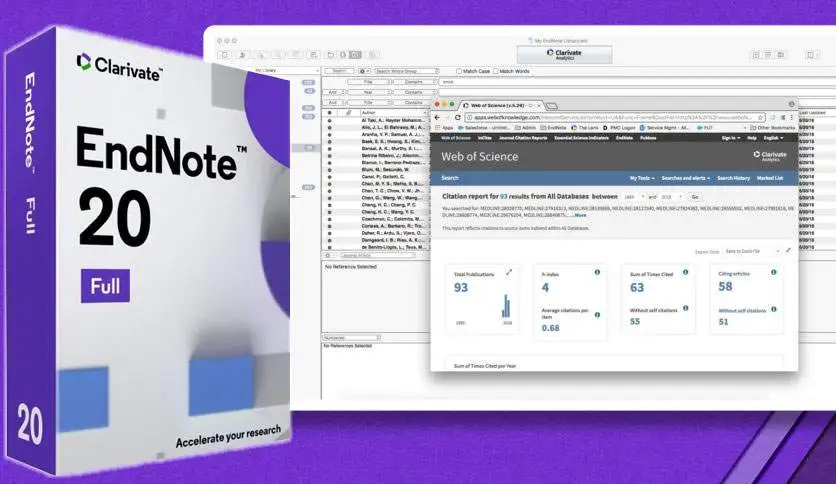
Finding a journal’s Impact Factor (IF) is an essential step when selecting a publication venue, evaluating journal credibility, or preparing a manuscript submission. However, researchers frequently encounter conflicting metrics, outdated citation scores, and third-party websites claiming to provide official Impact Factors without identifying their sources.
The confusion often starts when a journal displays an impressive citation score on its website, but that number does not match Clarivate’s Journal Citation Reports (JCR). Other journals appear in Scopus or SCImago but have no official Journal Impact Factor at all.
So, how can you find the Impact Factor of a journal accurately in 2026? The answer depends on whether you need the official Clarivate Journal Impact Factor (JIF), a freely accessible alternative metric, or a comprehensive journal evaluation.
The Journal Impact Factor is an annual citation metric published by Clarivate through Journal Citation Reports. It measures citations received during a particular year by eligible scholarly items published in a journal during the preceding two years.
This guide explains seven reliable free and paid methods to find a journal’s Impact Factor, verify its indexing status, distinguish JIF from CiteScore and SCImago Journal Rank (SJR), and identify misleading or fabricated journal metrics.
💡 Need expert help with your paper?
Transform your manuscript with ManuscriptLab's professional editing and formatting services!
1. Understand What a Journal Impact Factor Actually Measures
Before searching for a journal’s Impact Factor, understand what the metric represents and which organization publishes it.
The Journal Impact Factor (JIF) is a journal-level citation indicator calculated and published by Clarivate through its Journal Citation Reports platform. It is based on citation data from the Web of Science Core Collection.
JIF helps researchers understand the citation performance of journals within scholarly publishing. Universities, research institutions, funding agencies, and academic departments may consider it when evaluating publication venues.
However, the Impact Factor measures journal-level citation activity. It does not directly measure the scientific quality of an individual article, researcher, or research project.
How Is the Journal Impact Factor Calculated?
Clarivate calculates the standard Journal Impact Factor using a two-year citation window.
The formula is:
JIF = A / B
Where:
- A: Total citations received during the calculation year by eligible scholarly items published in the journal during the preceding two years.
- B: Total eligible scholarly items published by the journal during those same two years.
For example, consider a hypothetical journal calculating its 2025 Impact Factor, released in 2026.
| Calculation component | Value |
| Citations received in 2025 to eligible 2023–2024 content | 1,200 |
| Eligible articles and reviews published in 2023–2024 | 300 |
| 2025 Journal Impact Factor | 4.0 |
Therefore:
JIF = 1,200 / 300 = 4.0
This means the journal received an average of four citations per eligible scholarly item in the calculation period.
Important: The numerator and denominator do not necessarily include identical document types. Clarivate’s methodology distinguishes between citation-eligible content and the scholarly items counted in the denominator.
What Is the Industry Standard?
The official JIF comes from Clarivate’s Journal Citation Reports. A journal’s publisher website, Google search result, or third-party ranking page is not an independent authority for establishing its official current JIF.
In 2026, researchers should distinguish between the JIF release year and the citation year. For example, the 2025 JIF released in 2026 uses citations accumulated during 2025.
Common pitfall: Do not assume that a journal’s latest displayed Impact Factor is its 2026 JIF. Always check the metric year and release date.
2. Method 1: Find the Official Impact Factor Through Clarivate Journal Citation Reports (Paid Method)
The most reliable way to find a journal’s official Impact Factor is through Clarivate Journal Citation Reports (JCR).
JCR is the official platform for accessing Clarivate’s Journal Impact Factor and related journal-level citation indicators.
Step-by-Step Instructions
Step 1: Open Journal Citation Reports.
Visit https://jcr.clarivate.com/ and access the platform using your institutional or individual subscription, where available.
Step 2: Sign in through your institution.
If your university subscribes to Clarivate products, select the institutional sign-in option. Depending on your institution, access may be available through your university library, campus network, or remote authentication system.
Step 3: Search for the journal.
Enter the journal’s complete title or ISSN in the search bar.
Using the ISSN is particularly useful when journals have similar titles or when a publication has undergone a name change.
Step 4: Open the journal profile.
Select the correct journal from the results. Check its title, publisher, ISSN, subject categories, and publication details.
Step 5: Locate the Journal Impact Factor.
Find the Journal Impact Factor displayed on the journal profile. Record the metric year rather than copying the number without context.
Step 6: Review additional indicators.
Examine the five-year Impact Factor, category ranking, percentile, and other available indicators to understand the journal’s position within its subject area.
Why Is This Method Important?
JCR provides the official metric rather than an estimate calculated from another citation database.
It is especially useful when:
- Applying for academic promotions.
- Preparing institutional research reports.
- Evaluating journals for doctoral publications.
- Comparing journals within a subject category.
- Verifying publisher claims about Impact Factor.
Industry standard: Always report the metric with its year, such as 2025 Journal Impact Factor, rather than simply writing Impact Factor: 4.0.
Common pitfall: Having access to Web of Science does not automatically mean you have access to every JCR feature. Web of Science and Journal Citation Reports are related Clarivate products, but their access arrangements and functions differ.
3. Method 2: Use the Web of Science Master Journal List (Free Method)
If you do not have a Journal Citation Reports subscription, the Web of Science Master Journal List (MJL) is an excellent starting point.
Clarivate provides this resource free of charge. It allows researchers to search journals and verify their inclusion in Web of Science.
However, there is an important distinction: being indexed in Web of Science does not automatically mean that a journal has an official Journal Impact Factor.
How to Check a Journal
- Visit the Web of Science Master Journal List.
- Enter the journal title or ISSN.
- Select the matching journal from the search results.
- Review its indexing information and Web of Science collection.
- Check whether the journal is included in the relevant Journal Citation Reports release.
- If the profile does not provide the current JIF, verify the figure through JCR or the journal publisher.
Understand the Indexing Categories
Web of Science includes several collections, and their presence should not be confused with JIF eligibility.
| Web of Science collection | Description | JCR eligibility |
| SCIE | Science Citation Index Expanded | Eligible |
| SSCI | Social Sciences Citation Index | Eligible |
| AHCI | Arts & Humanities Citation Index | Eligible |
| ESCI | Emerging Sources Citation Index | Eligible under current JCR policy |
| Other Web of Science databases | Specialized bibliographic collections | Not automatically eligible |
Clarivate’s current policy includes eligible journals from the Web of Science Core Collection in JCR. Therefore, do not rely on an outdated assumption that ESCI journals cannot receive an Impact Factor.
Why this method matters: It helps researchers establish whether a journal has a legitimate Clarivate indexing record before relying on its advertised metrics.
Common pitfall: A journal may display a Web of Science logo without being indexed in the specific collection you expect. Verify the actual journal record, not just the logo.
4. Method 3: Check the Journal Publisher’s Official Website (Free Method)
Many reputable publishers display their journals’ latest Impact Factors directly on their websites.
This is particularly useful when you cannot access JCR through an institutional subscription.
Publishers such as Springer Nature, Elsevier, Wiley, and Taylor & Francis frequently provide journal metrics on individual journal pages.
How to Find the Metric
Step 1: Open the journal’s official website.
Step 2: Navigate to sections such as:
- Journal Metrics
- About This Journal
- Journal Information
- Citation Metrics
- Journal Impact
Step 3: Identify the displayed Journal Impact Factor.
Step 4: Check the metric year and confirm that it is attributed to Clarivate or Journal Citation Reports.
Step 5: Cross-check the journal’s ISSN and title against Clarivate’s Master Journal List.
For example, publishers may display the two-year JIF alongside the five-year JIF, Eigenfactor Score, Article Influence Score, and other indicators.
Can You Trust Publisher-Displayed Impact Factors?
Generally, a publisher’s official journal page is a useful source, particularly when it clearly identifies the Clarivate JIF and its reporting year.
However, publishers sometimes retain older metrics in archived pages, promotional materials, or downloadable journal brochures.
Always check the publication date of the information.
Industry standard: Record the metric name, reporting year, and source. For example:
Journal Impact Factor: 4.0 (2025 JIF; 2026 JCR release).
Common pitfall: Do not mistake a publisher’s internal citation score, CiteScore, or alternative journal ranking for the official Clarivate Impact Factor.
Also read: How to Write a Journal Submission Cover Letter That Gets Accepted
5. Method 4: Find Journal Metrics Through Scopus Preview (Free Method)
Researchers without a Clarivate subscription can use Scopus Sources to evaluate journal performance.
Scopus Preview provides free access to selected journal information and source metrics, including CiteScore.
However, Scopus CiteScore is not the same as the Journal Impact Factor.
Step-by-Step Process
- Open Scopus Sources.
- Search using the journal title or ISSN.
- Select the correct journal.
- Review the journal’s source profile.
- Locate its latest CiteScore.
- Examine its CiteScore percentile, subject category, and other available indicators.
- Verify the journal’s current Scopus coverage.
What Is CiteScore?
CiteScore is a journal-level citation metric developed by Elsevier.
Unlike the standard two-year JIF calculation, CiteScore uses a four-year citation window.
Its calculation considers citations received during a four-year period by eligible document types published during that same period.
For example, the 2024 CiteScore calculation considers citations received during 2021–2024 to eligible documents published during 2021–2024.
JIF vs. CiteScore: What Is the Difference?
| Evaluation criterion | Journal Impact Factor | Scopus CiteScore |
| Publishing organization | Clarivate | Elsevier |
| Primary database | Web of Science | Scopus |
| Citation window | 2 years | 4 years |
| Official platform | Journal Citation Reports | Scopus Sources |
| Free public access | Full JCR access generally requires a subscription | Available through Scopus Preview |
| Calculation methodology | Citations divided by eligible citable items | Citations divided by eligible indexed documents |
| Reporting frequency | Annual | Annual |
| Can replace the other metric? | No | No |
Why this method matters: CiteScore helps authors evaluate journals when an official JIF is unavailable or when they want another perspective on citation performance.
Common pitfall: Never write that a journal has an Impact Factor of 6.5 when the number actually represents its CiteScore. Use the correct metric name in research proposals, academic CVs, and institutional reports.
6. Method 5: Use SCImago Journal Rank (SJR) (Free Method)
The SCImago Journal & Country Rank platform is another valuable resource for evaluating academic journals.
It provides publicly accessible journal rankings and bibliometric indicators using data supplied by Scopus.
However, SCImago does not publish the official Clarivate Journal Impact Factor.
Instead, it calculates the SCImago Journal Rank (SJR), which measures the prestige associated with citations received by a journal.
How to Find a Journal’s SJR
- Visit SCImago Journal & Country Rank.
- Enter the journal title or ISSN.
- Open the corresponding journal profile.
- Review the latest SJR value.
- Check the journal’s subject category.
- Examine its quartile ranking (Q1, Q2, Q3, or Q4).
- Review its historical performance and publication information.
What Makes SJR Different?
SJR uses a weighted citation approach.
A citation from a highly prestigious journal contributes more than a citation from a journal with a lower prestige score.
This approach is inspired by the PageRank concept used in search engines.
SCImago uses Scopus data, but its ranking methodology is distinct from Clarivate’s JIF calculation.
Understanding Journal Quartiles
SCImago groups journals into four quartiles within subject categories:
| Quartile | General interpretation |
| Q1 | Highest-ranked quartile |
| Q2 | Second-ranked quartile |
| Q3 | Third-ranked quartile |
| Q4 | Lowest-ranked quartile |
A Q1 journal generally occupies a higher position within its category than a Q4 journal.
However, quartile rankings depend on the subject category and ranking methodology. A journal may have different quartiles in different categories.
Common pitfall: A journal indexed in SCImago is not automatically guaranteed to have an official Clarivate Impact Factor. SCImago uses Scopus data, not Clarivate’s JCR database.
Use SJR as a complementary evaluation metric, not as a substitute for JIF.
Also read: 10 Key Reasons Manuscripts Get Rejected Before Peer Review
7. Method 6: Access Journal Metrics Through Your University Library (Institutional Method)
If your institution subscribes to Clarivate products, your university library may provide access to Journal Citation Reports.
This is often the most practical option for PhD candidates, clinical researchers, university faculty, and postgraduate students who need verified citation information.
How to Access JCR Through Your Institution
- Open your university library’s official website.
- Navigate to the electronic databases or research resources section.
- Search for Journal Citation Reports or Clarivate.
- Check whether institutional access is available.
- Authenticate using your university credentials or remote-access system.
- Open JCR and search for the target journal.
Some universities also provide access through library proxy services, campus IP authentication, or institutional single sign-on.
Why Choose Institutional Access?
Institutional access can provide more comprehensive information than publicly accessible journal listings.
Depending on the subscription, researchers may be able to examine:
- Official Journal Impact Factors.
- Five-year Impact Factors.
- Journal Citation Indicator (JCI).
- Category rankings and percentiles.
- Citation distribution.
- Historical journal performance.
- Detailed citation information.
Common pitfall: Do not assume that every university subscription includes JCR. Ask your librarian to confirm access to the specific product.
8. Method 7: Identify Fake Impact Factors and Misleading Journal Metrics
One of the most serious problems in academic publishing is the promotion of fabricated or misleading Impact Factors.
Some questionable publishers advertise unofficial metrics to attract authors who are unfamiliar with established indexing and citation databases.
These numbers may appear convincing, but they do not establish that a journal has received an official Clarivate JIF.
How to Spot Fake Impact Factor Metrics
1. Unrecognized metric providers
Be cautious when a journal advertises an Impact Factor from an unfamiliar organization without explaining its calculation methodology or data source.
2. No Clarivate verification
If a journal claims an official JIF but cannot be located in the relevant JCR release, investigate further.
3. Confusing indexing claims
A journal may claim to be indexed in Google Scholar, Crossref, or other academic databases. These services do not independently establish an official Clarivate Impact Factor.
4. Guaranteed publication promises
Be cautious of journals promising publication within a few days or guaranteeing acceptance without meaningful peer review.
5. Unverifiable editorial boards
Check whether the listed editors are genuine researchers and whether their institutional affiliations can be independently verified.
6. Misleading metric terminology
Terms such as Global Impact Factor, Universal Impact Factor, or International Impact Factor should not be treated as synonyms for Clarivate’s JIF.
How to Verify a Journal’s Credibility
Use multiple independent checks:
- Search the journal in Clarivate’s Master Journal List.
- Verify its Scopus coverage through Scopus Sources.
- Check its publisher and editorial board.
- Review its peer-review policy.
- Examine its publication ethics statements.
- Confirm its indexing and journal title history.
- Review its author fees and publication policies.
For ethical publishing guidance, consult the Committee on Publication Ethics (COPE).
Industry standard: Evaluate a journal using several indicators, including indexing status, peer-review transparency, editorial practices, publication ethics, and relevant citation metrics.
Common pitfall: A high advertised Impact Factor does not guarantee journal quality. Similarly, a journal without a JIF is not automatically predatory or unsuitable for publication.
Also read: Impact Factor vs CiteScore vs SJR: Which Journal Metric Should You Trust in 2026?
9. Can You Find the Official Clarivate Impact Factor Completely Free?
This is one of the most common questions among researchers without institutional subscriptions.
The answer requires distinguishing between free journal verification and access to the complete JCR product.
The Master Journal List is free to search, and publisher websites may display the latest official JIF. Some universities also provide access without additional payment to their students and faculty.
However, full access to Journal Citation Reports generally requires a subscription.
| Resource | Free access? | Provides official JIF? |
| Clarivate Journal Citation Reports | Generally subscription-based | Yes |
| Web of Science Master Journal List | Yes | Supports journal and indexing verification |
| Official publisher website | Often | May display Clarivate JIF |
| Scopus Sources | Yes, selected information | No; provides Scopus metrics |
| SCImago | Yes | No; provides SJR |
| University library | Depends on subscription | Yes, if JCR is available |
What Should Researchers Do Without JCR Access?
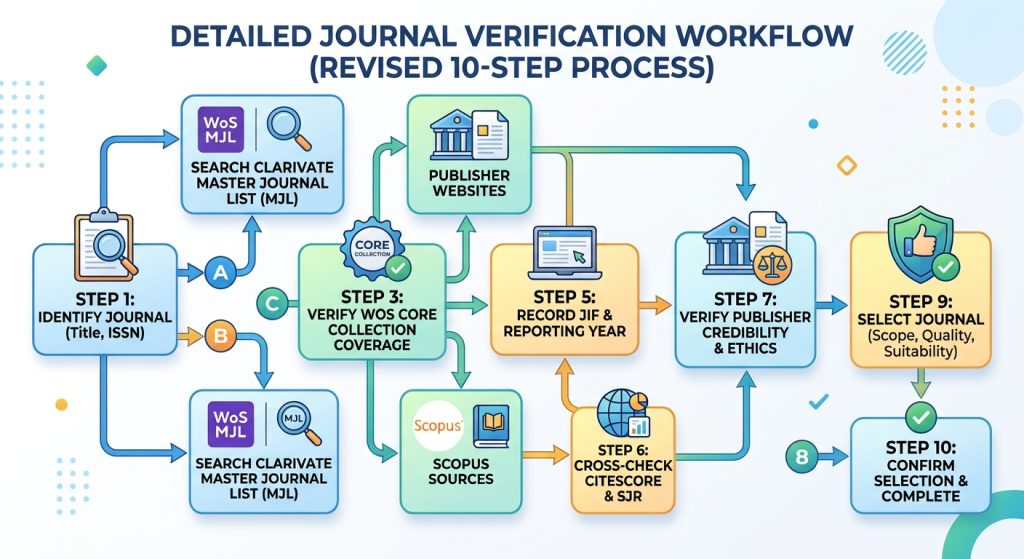
Follow this practical verification sequence:
- Search the journal through the Master Journal List.
- Verify its Web of Science Core Collection coverage.
- Visit the publisher’s official journal page.
- Look for a clearly identified Clarivate JIF and reporting year.
- Compare the journal’s alternative metrics through Scopus and SCImago.
- If the official number is not publicly displayed, ask your university librarian or a researcher with authorized JCR access to verify it.
Do not rely on websites claiming to provide unrestricted official JIF data without identifying a reliable source.
Also read: How Much Should I Charge for Academic Proofreading in 2026?
10. How to Choose the Right Journal Using Impact Factor and Other Metrics
Finding a journal’s Impact Factor is only one part of selecting an appropriate publication venue.
A high-impact journal may not necessarily be the best destination for your manuscript. Journal selection should also account for research scope, readership, article type, acceptance expectations, publication fees, and peer-review standards.
Evaluate These Five Factors Before Submission
1. Scope compatibility
Read the journal’s aims and scope. Your manuscript should address its intended readership and subject area.
2. Citation performance
Compare JIF, CiteScore, SJR, and subject-category percentiles where relevant.
3. Indexing credibility
Verify the journal’s current coverage in Web of Science and Scopus rather than relying exclusively on publisher claims.
4. Publication costs
Review the Article Processing Charge (APC), subscription options, waiver policies, and other publication fees.
5. Editorial and ethical standards
Check peer-review procedures, publication ethics, authorship requirements, copyright policies, and relevant reporting guidelines such as CONSORT and STROBE.
A journal with a moderate JIF and strong subject alignment may offer a more appropriate publication opportunity than a prestigious journal that rarely publishes research in your discipline.
For additional support, explore ManuscriptLab’s professional editing services before submitting your manuscript.
11. Visual Blueprint: How to Find and Verify a Journal’s Impact Factor
12. Frequently Asked Questions (FAQs)
1. How can I find the Impact Factor of a journal for free?
Start with Clarivate’s Master Journal List to verify indexing. Then check the publisher’s official website for its latest JIF. You can also use Scopus Sources and SCImago to examine alternative journal metrics, although these do not provide the official Clarivate JIF.
2. Are journals indexed in SCImago guaranteed to have an official Clarivate Impact Factor?
No. SCImago uses Scopus data to calculate its own journal indicators, including SJR. Clarivate uses Web of Science Core Collection data for JCR. A journal may appear in SCImago without having an official Clarivate JIF.
3. Can I find the official Clarivate Journal Impact Factor completely free without institutional access?
You may be able to find the official figure on the journal publisher’s website or through publicly available journal information. However, complete access to Journal Citation Reports generally requires a subscription. The Master Journal List remains a free tool for checking journal records.
4. What is the main difference between JIF and Scopus CiteScore?
JIF is published by Clarivate and uses a two-year citation window. CiteScore is published by Elsevier and uses a four-year citation window. Their underlying databases and calculation methodologies also differ.
5. Why doesn’t my target journal have an Impact Factor listed on Clarivate JCR?
Possible reasons include ineligibility for JCR inclusion, recent indexing, changes in journal coverage, or removal following editorial reassessment. Check the Master Journal List and the relevant JCR release before concluding that the journal is unindexed or unreliable.
6. Does an ESCI-indexed journal have an Impact Factor in 2026?
Yes. Under Clarivate’s current JCR policy, eligible journals from the Web of Science Core Collection, including ESCI journals, can receive a Journal Impact Factor. Verify the journal’s individual record and the relevant JCR edition.
7. Is a Q1 journal always better than a Q2 journal?
Not necessarily. Quartiles reflect relative rankings within subject categories and depend on the database and methodology. A Q2 journal may be a better publication destination if its scope, readership, and editorial priorities align more closely with your research.
8. How often does Clarivate update the Journal Impact Factor?
Clarivate releases Journal Citation Reports annually. Researchers should identify the reporting year of the metric and avoid using outdated figures in academic applications or journal selection decisions.
Pre-Submission Checklist: Verify a Journal Before Sending Your Manuscript
Use this checklist to evaluate your target journal:
- Confirm the journal’s full title and ISSN.
- Search for the journal in Clarivate’s Master Journal List.
- Verify its Web of Science Core Collection indexing status.
- Check its official Journal Impact Factor and reporting year.
- Confirm the figure through JCR or the publisher’s official website.
- Review its five-year Impact Factor, where available.
- Check its Scopus CiteScore and percentile.
- Examine its SCImago SJR and subject-category quartile.
- Investigate suspicious or unverifiable citation metrics.
- Review the journal’s aims, scope, and readership.
- Verify its peer-review process and publication ethics.
- Calculate APCs and other publication costs.
- Confirm author guidelines and manuscript formatting requirements.
Conclusion
Finding a journal’s Impact Factor in 2026 requires more than searching for a number on Google or relying on a publisher’s promotional claims. Researchers should understand the difference between official Clarivate JIF, Scopus CiteScore, and SCImago Journal Rank before making publication decisions.
For the most reliable verification, start with Clarivate’s Master Journal List, consult Journal Citation Reports where accessible, and cross-check publisher information. Use Scopus and SCImago as complementary evaluation tools rather than substitutes for the official Impact Factor.
Remember that citation metrics are only one part of responsible journal evaluation. Prioritize research relevance, editorial integrity, indexing credibility, and publication ethics when choosing where to submit your work.
Preparing your manuscript for journal submission? Let ManuscriptLab help you improve academic language, strengthen manuscript presentation, and meet journal formatting requirements. A professionally prepared manuscript gives your research a stronger foundation for the peer-review process.